

Primary & Secondary Copper
Primary Copper: From Ore
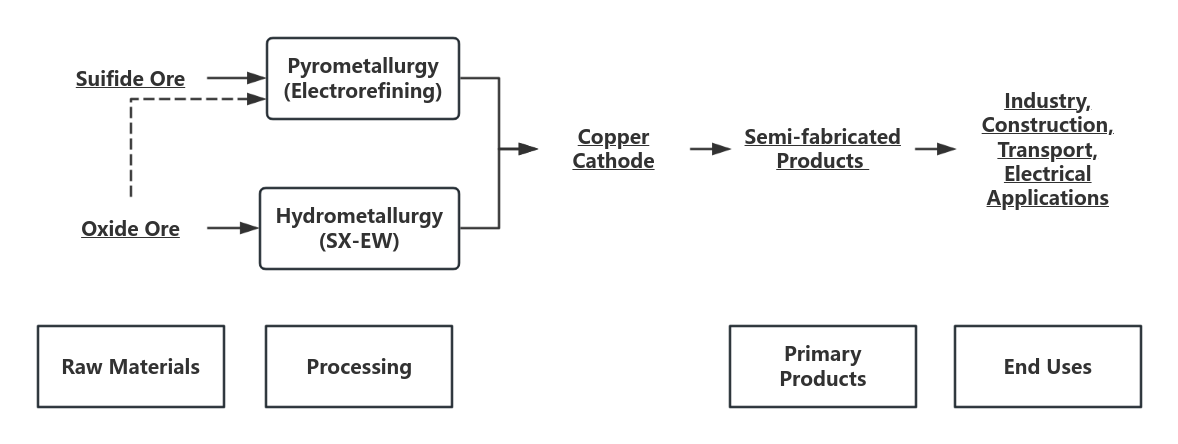
About 80% of the world’s mined copper originates in Chalcopyrite (CuFeS2) ores. Chalcopyrite is extremely difficult to dissolve in aqueous solutions, so the vast majority of copper extraction from these ores is pyrometallurgical.
About 80% of copper from ore is produced by flotation, smelting and refining. The remaining 20% is produced hydro metallurgically. The ores most commonly treated by hydrometallurgical processing naturally oxidized Cu minerals, including carbonates, hydroxy-silicates, sulfates, and chalcocite (Cu2S). Leaching method is occasionally applied to Cu-bearing flotation tailings, mine wastes, old mines, and fractured ore bodies. However, leaching of ore heaps is far and away the largest hydrometallurgical Cu extraction technique.
Secondary Copper: From Scrap
About 1/3 of the copper currently produced in the world is derived from secondary materials. Secondary materials is recycled in numerous ways. New scrap is often recycled directly back to the melting furnace where it was produced in the first place (Wood et al. , 2011). Old scrap and waste streams (and some new scrap) travel a more complex path. They can either be added to one of the furnaces used to produce primary copper. They can also be reprocessed by secondary smelters specially designed to handle such material.
Typical Scrap Processing & Beneficiation
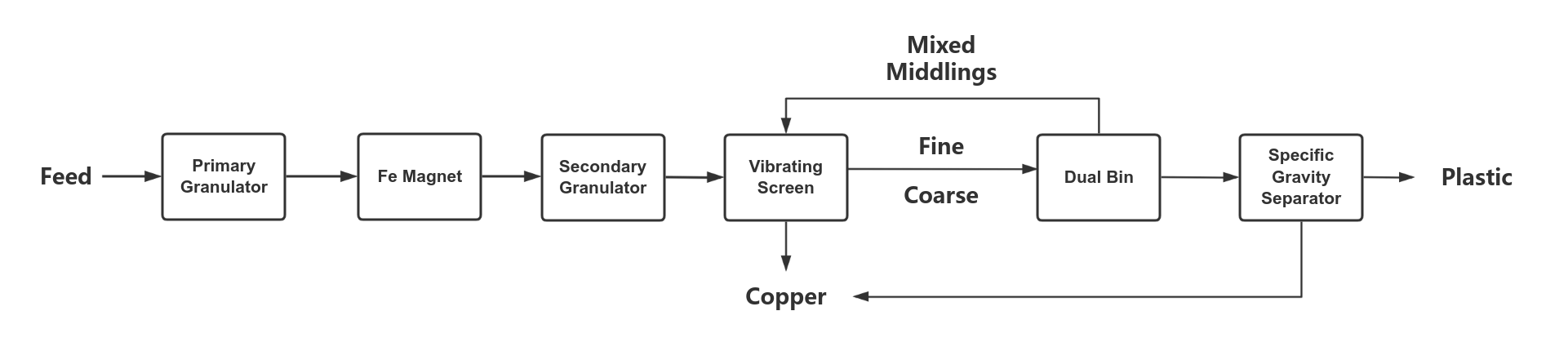
1. Wire & Cable Processing
2. Electronic Scrap Treatment
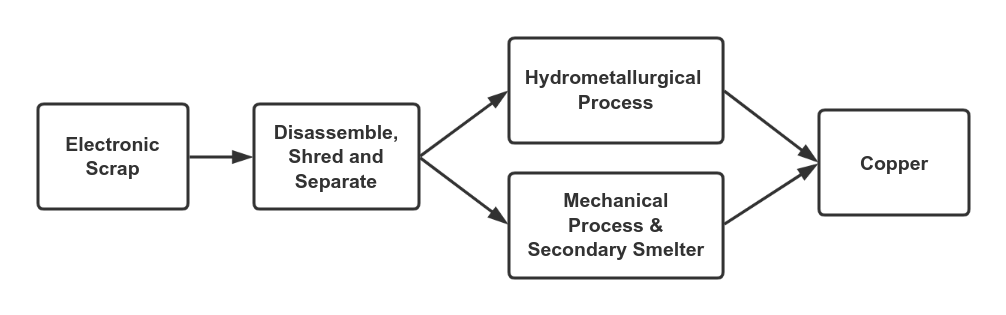
Although it consists of a variety of items, the overall composition of electronic scrap can be divided into three categories: (a) Plastic (~30%), (b)Refractory Oxide (~30%) and (c) Metal (~40%). About half of the metal content is copper. It also contains significant amount of gold and silver. Copper smelting/refining is already set up to recover gold and silver, so it is a logical destination for treating electronic scrap.
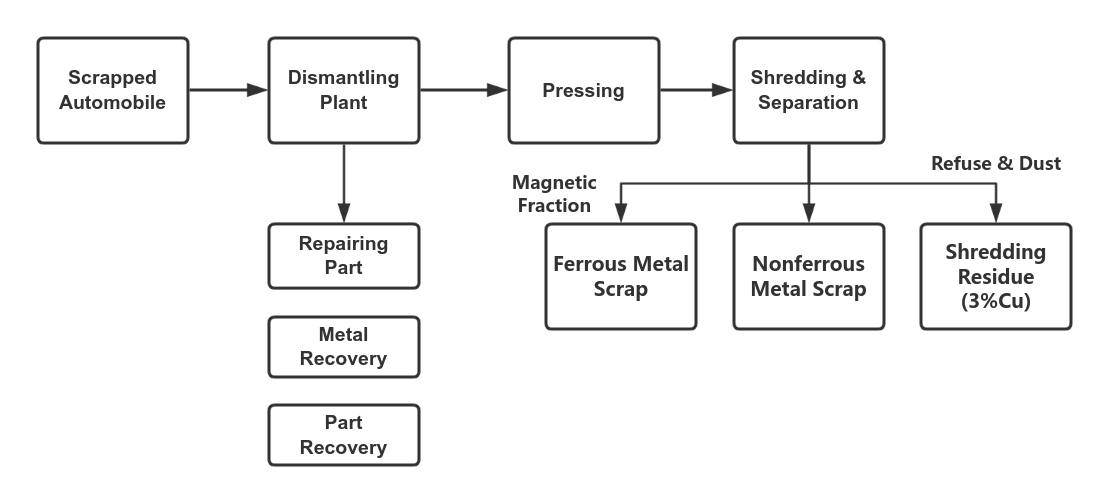
3. Automotive Copper Recovery (ELV) ***Rare
Chemical Metallurgy of Copper Recycling
Copper scrap is smelted in primary (concentrate) and secondary (scrap) smelters. Primary smelters mainly smelt concentrate. Some, however, are well adapted to smelting all grades of scrap. These processes do not completely remove Ni and Sn from Cu, so the refining furnace product must be electro-refined. Electrorefining also recovers Ag, Au, and Pt group metals.
Scrap process in primary copper smelters
Secondary copper can be added at three locations in the primary copper making process. The most common is the converting furnace, but additions are also made in the smelting furnace and anode furnace.
Scrap process in secondary copper smelters
Although each secondary copper smelter is unique, they can be divided into two groups. The first type are metal smelters, which treat only higher-grade metallic scrap. Many of these smelters are located in China. The second are black copper smelters, who process low-grade scrap and waste along with higher-value scrap.